
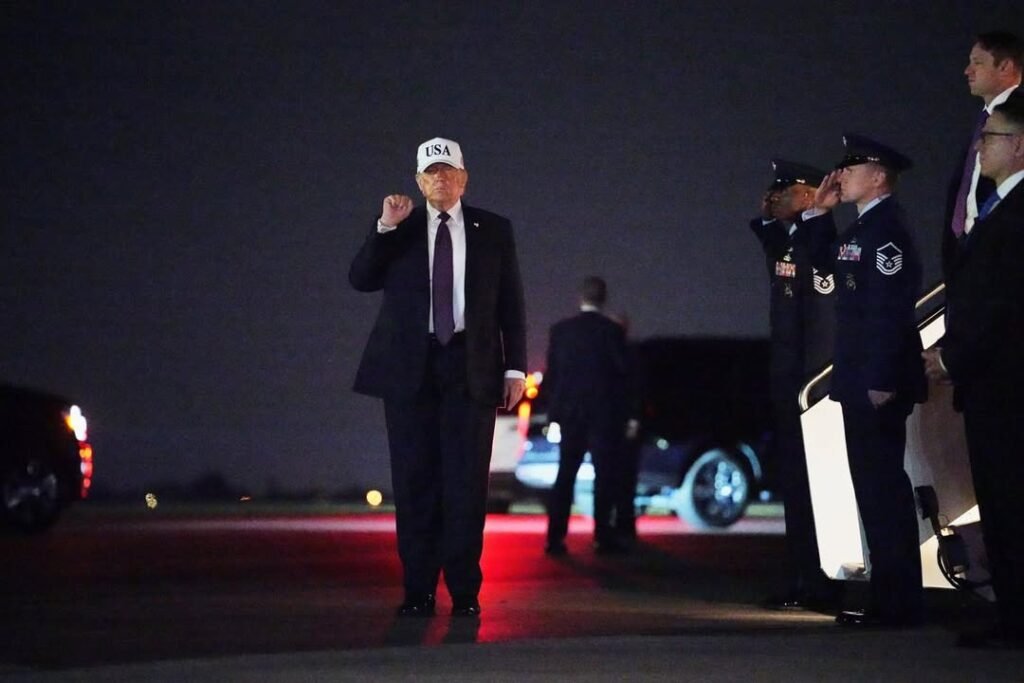
Trump’s Iran War Timeline Keeps Changing—What Does That Mean for Brevard County?
Here’s something that caught my attention while grabbing my morning coffee at the Satellite Beach Starbucks: President Trump’s estimate for how long the Iran conflict will last just shifted. Again. Yesterday we were hearing “a matter of days.” Today? “Four weeks or so.”
Look, I don’t know about you, but when timelines start expanding like that, my spidey-senses start tingling. And if you’re here in Melbourne, Cocoa Beach, or anywhere in Brevard County, you’re probably wondering the same thing I am: How long is this thing actually going to last?
The Timeline That Keeps Growing
It’s like watching someone estimate how long a home renovation will take. First it’s a weekend project. Then it’s two weeks. Before you know it, you’re eating takeout for three months because your kitchen’s still torn apart.
The shift from “days” to “four weeks or so” isn’t just semantics. It’s a fundamental change in messaging that raises some pretty obvious questions. I mean, that’s roughly a 700% increase in the estimated timeframe. In less than 24 hours.
What changed? Did new intelligence come in? Did military advisors present a different picture? Or is this just the fog of war doing what fog does best—making everything murky and hard to see?
Why This Matters to Melbourne Residents
You might be thinking, “I’m just trying to get to work on I-95 without hitting traffic. Why should I care about war timelines?”
Fair question. Here’s why it matters to us locally:
- Patrick Air Force Base – Our neighbors and friends stationed there could see extended deployments
- Economic ripple effects – Gas prices, market volatility, defense contractor activity in the Space Coast
- Military families – Brevard has one of the highest concentrations of veterans and active-duty families in Florida
- Port Canaveral operations – Shipping routes through the Persian Gulf affect global trade
This isn’t just happening “over there.” It touches home in ways we don’t always immediately recognize.
So How Long Will It Actually Last?
Here’s where I have to be straight with you: Nobody really knows.
I’ve been following military conflicts long enough to know that initial timelines are basically educated guesses wrapped in optimism and tied with a bow of political messaging. Remember when we’d be in and out of Afghanistan quickly? Yeah.
Let me break down the possibilities based on historical patterns and current realities:
| Scenario | Estimated Duration | Likelihood |
|---|---|---|
| Limited strikes only | 1-2 weeks | Decreasing daily |
| Extended air campaign | 4-8 weeks | Increasingly likely |
| Prolonged conflict | Months to years | Depends on mission objectives |
The Factors That Actually Matter
Wars don’t follow PowerPoint presentations. They follow their own logic. Here’s what will actually determine the timeline:
Iran’s response. You can’t control how the other side reacts. If Iran decides to escalate rather than de-escalate, all bets are off. It’s like starting an argument with your spouse—you might plan for a five-minute discussion, but if it hits the wrong nerve, you’re in for a long night.
Mission creep. This is the silent killer of war timelines. What starts as “we’re just taking out missile sites” becomes “well, now we need to secure this” and “we should probably deal with that too.” Before you know it, four weeks becomes four months.
Regional involvement. Iran doesn’t exist in a vacuum. What do their proxies in Iraq, Syria, Lebanon, and Yemen do? How does Israel respond? What about Saudi Arabia? Each new player adds complexity and time.
Political will at home. American patience for military operations isn’t infinite. We’ve learned that lesson repeatedly over the past two decades.
What History Teaches Us
I hate to be the bearer of pessimistic news, but history isn’t exactly encouraging when it comes to accurate war timelines. Let’s look at the track record:
The first Gulf War in 1991? That one actually went relatively according to plan—about six weeks of combat operations. But that was a different type of conflict with very limited objectives.
Iraq 2003? We were told we’d be greeted as liberators and be out quickly. We know how that turned out. Afghanistan? Twenty years instead of twenty weeks.
The problem is that modern warfare doesn’t have clean endings anymore. There’s no signing ceremony on a battleship. Victory conditions get fuzzy. Mission objectives evolve.
My Honest Assessment
If you’re asking me—and you kind of are by reading this—I think we’re looking at something longer than four weeks but hopefully shorter than four months of active combat operations. But here’s the thing: even when the shooting stops, we’ll likely maintain a presence and involvement for years.
The shift from “days” to “weeks” in the official messaging tells me that initial planning met the harsh reality of operational complexity. When timelines start expanding before operations really ramp up, that’s usually a sign that the situation is more complicated than initially presented.
What You Can Do
Feeling helpless about global events is natural. But you’re not powerless. Here in Brevard County, we take care of our own.
Support local military families. Organizations like the USO Central Florida and Space Coast Honor Flight do incredible work. If you know someone with a loved one deployed, check in on them. Seriously. A text message matters.
Stay informed. Don’t just accept the first timeline you hear. Information evolves. Understanding evolves. Keep asking questions.
Prepare practically. Watch gas prices. If you’ve been putting off filling up that propane tank or topping off your emergency supplies, now might be the time. I’m not saying panic—I’m saying be sensible.
The Bottom Line for Brevard Residents
Look, I wish I could give you a definitive answer. “The war will last exactly 27 days and end on a Tuesday.” But anyone who claims that level of certainty is either lying or selling something.
What I can tell you is this: when official timelines start stretching before our eyes, it’s a signal to pay attention. The gap between “days” and “four weeks or so” represents uncertainty—and in military operations, uncertainty usually means things take longer than planned, not shorter.
We’re fortunate here in Melbourne to have a community that knows how to pull together. We’ve weathered hurricanes, economic storms, and everything else thrown our way. Whatever this situation becomes, we’ll handle it the same way we always do—by looking out for each other and staying grounded in reality rather than getting lost in speculation.
Keep your eyes open. Support your neighbors. And maybe keep your gas tank a little fuller than usual for the next few weeks.
What do you think? How long do you believe this will actually last? I’d genuinely like to hear from you.