
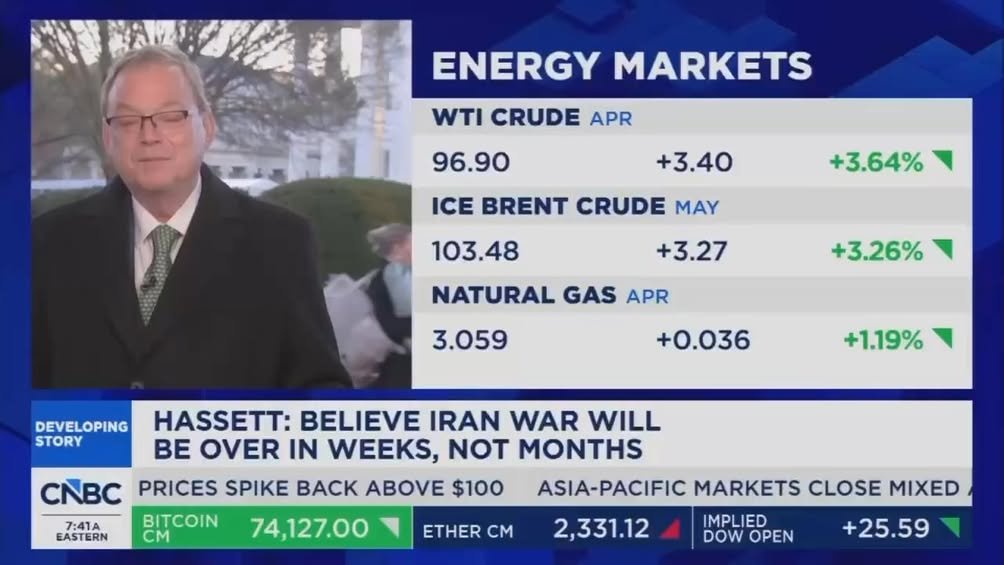
Local Insight: How Extended Conflict Could Impact the U.S. Economy (and Our Space Coast Community)
Imagine sipping your morning coffee on the Space Coast while pondering the pressing issues of our nation. Recently, influential economist Hassett made a striking remark: “If the war were to be extended, it wouldn’t really disrupt the US economy very much at all. It would hurt consumers, and we’d have to think about what we’d have to do about that, but that’s really the last of our concerns right now.” This quote instantly captivates attention, and today, we’re diving deep into its implications—especially for our local Space Coast community.
The Big Picture: What Does Hassett Really Mean?
Hassett’s statement might sound paradoxical. On one hand, he downplays the overall economic disruption, yet he points out that consumers will definitely feel the pinch. Let’s break this down:
• Consumer Impact: Despite the robust nature of the U.S. economy, extended conflict can lead to inflation, higher prices, and uncertainty.
• Long-Term Concerns: While the immediate economic factors might appear to be controlled, underlying stresses could eventually ripple out affecting businesses and individual finances.
Picture it like a robust spaceship built to endure cosmic challenges—our economy can handle some turbulence, but it’s the everyday citizens (the fuel and crew) who feel every jolt.
Local Angle: Why Space Coast Residents Should Care
Living on the Space Coast means you’re no stranger to rapid changes—from cutting-edge aerospace developments to shifting economic landscapes. Here’s why the Hassett quote matters for you:
• Economic Resilience: Just as we watch rocket launches with awe, we also witness how economic forces can launch us into new challenges.
• Consumer Responsibility: Increased consumer prices could affect daily expenses, from groceries to energy bills, directly impacting your lifestyle.
• Community Stability: When residents face economic challenges, it can influence local businesses and community projects that many of us rely on.
Understanding the Economic Components: A Closer Look
To help you visualize the situation, check out the table below, which outlines potential economic effects versus consumer impacts:
| Economic Factor | Impact if Conflict Extends | Result for Consumers |
|---|---|---|
| Inflation | Moderate increase, sustained over time | Higher prices on everyday items |
| Market Volatility | Little disruption in overall market stability | Uncertainty in investment and savings |
| Supply Chain Adjustments | Rapid reconfiguration to meet domestic demand | Potential delays or increased costs in goods |
This table breaks down how even if the national economy remains sturdy, the shockwaves felt at the consumer level might call for personal budget adjustments and smarter spending strategies.
Frequently Asked Questions (FAQs)
Q1: How might extended conflict directly affect our day-to-day life?
A: While the U.S. federal economy might handle extended conflict with minimal disruptions, daily consumer costs (food, housing, transportation) could rise, affecting household budgets.
Q2: What should local businesses be aware of?
A: Businesses should be prepared for increased operational costs and shifting consumer spending habits. It might be wise to look into strategies for mitigating supply chain disruptions and preparing for possible economic volatility.
Q3: Is there any silver lining?
A: Yes, historically, periods of challenge often spur innovation and community solidarity. Space Coast businesses and residents have always shown resilience, adapting and thriving even in uncertain times.
Conclusion: Stay Informed and Connected
As we reflect on Hassett’s insights, it becomes clear that while the national narrative might seem reassuring, the local consumer impact is undeniable. For all of us here on the Space Coast, staying informed enables proactive steps—whether that means budget adjustments, engaging in community discussions, or supporting local businesses during turbulent times.
I encourage you to share your thoughts in the comments below—how do you think these economic shifts might affect you and your daily routine? Let’s foster a dialogue that empowers our community to navigate these challenges together.
For further reading and additional perspectives, check out the source link: Source link.