
“`html
What Just Happened Above Our Heads? D.C. Airports Ground to a Halt
Okay, so picture this: You’re cruising through your Friday, maybe thinking about weekend plans, when suddenly every plane in the Washington D.C. airspace gets told to basically stay put. Not exactly the plot twist anyone wanted, right?
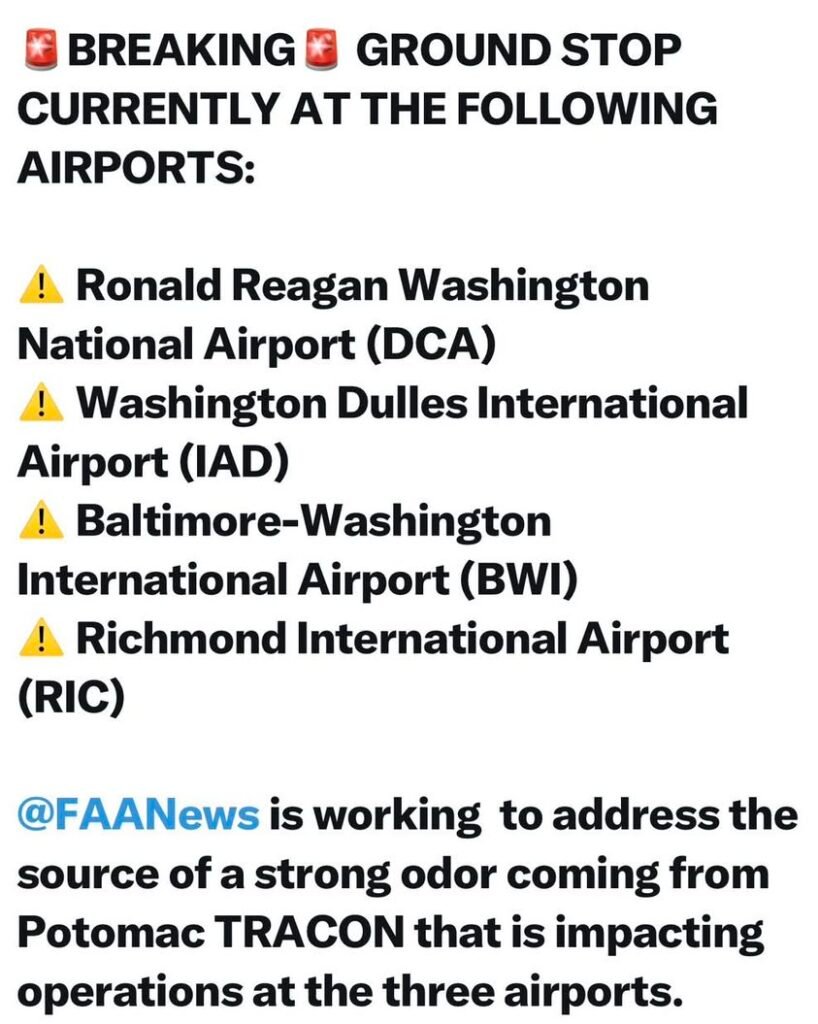
Here’s the deal—multiple airports around our nation’s capital hit the brakes Friday after someone caught a whiff of something seriously off at a critical air traffic control facility. We’re talking about the Potomac TRACON, which is like the brain center for keeping planes from playing bumper cars in the sky above D.C.
And yeah, this matters to us here in Melbourne.
Why Should Brevard County Residents Care About D.C. Airport Drama?
I know what you’re thinking: “That’s way up there, and I’m down here enjoying my Space Coast life.” Fair point. But here’s the thing—when major hubs like Reagan National or Dulles International experience ground stops, it creates a domino effect that ripples through the entire national aviation system.
Got family flying in to visit you in Satellite Beach? Business trip planned from Orlando Melbourne International? That connecting flight through D.C. might’ve just gotten complicated. The aviation network is more connected than your neighborhood gossip chain, trust me.
What Actually Caused This Mess?
According to Transportation Secretary Sean Duffy, the culprit was a strong, unidentified odor at the Potomac TRACON facility. Now, before you roll your eyes and think “someone burned popcorn in the break room,” understand that when you’re dealing with air traffic controllers—the folks literally preventing midair disasters—you don’t mess around.
These controllers are responsible for managing thousands of flights daily. Their workspace needs to be pristine. An unusual smell could indicate:
- Electrical issues or overheating equipment
- Chemical leaks or hazardous materials
- HVAC system malfunctions
- Potential fire hazards
Any of these scenarios? Yeah, that’s a “stop everything immediately” situation.
How Does a Ground Stop Actually Work?
Think of it like a traffic light system, but for the sky. When the FAA issues a ground stop, they’re essentially hitting the pause button on departures. Planes already in the air continue to their destinations (because, you know, they can’t exactly pull over), but nothing new takes off heading toward the affected area.
It’s organized chaos with a purpose. Controllers prioritize safety over schedules, every single time.
| Ground Stop Impact | What It Means |
|---|---|
| Departing Flights | Held at gates or on taxiways until clearance |
| Arriving Flights | May be diverted or held in holding patterns |
| Duration | Varies based on issue severity—minutes to hours |
| Passenger Rights | Depends on airline policy and delay length |
The Bigger Picture: Aviation Safety in 2025
Look, I’ll be straight with you—we’ve seen some concerning aviation incidents lately. From door panels popping off mid-flight to near-misses on runways, the industry’s under a microscope. So when something like this D.C. ground stop happens, it’s actually reassuring in a weird way.
It shows the system works. Controllers didn’t shrug off the smell and hope for the best. They followed protocol, prioritized safety, and dealt with the inconvenience.
That’s exactly what we want them to do.
What About Our Local Melbourne Airport?
Orlando Melbourne International Airport (MLB) operates independently from D.C.’s airspace, but don’t think we’re immune to these national disruptions. Our airport handles connections to major hubs daily—Delta flies to Atlanta, American goes to Charlotte, and yes, some travelers connect through D.C. airports.
When major facilities experience ground stops, the effects can include:
- Delayed arrivals of inbound aircraft
- Missed crew connections (pilots and flight attendants need to get places too)
- Cascading schedule disruptions throughout the day
- Increased passenger volume at smaller airports as travelers seek alternatives
We’re part of the national aviation ecosystem, whether we’re thinking about it or not.
What Travelers Should Know Moving Forward
Here’s my advice if you’re flying anytime soon, whether from Melbourne or anywhere else: build in buffer time. I’m serious. That tight 45-minute connection in D.C.? Risky business even on a good day.
Consider these smart travel moves:
- Book morning flights when possible—fewer cumulative delays
- Download airline apps for real-time updates before you even leave home
- Sign up for flight alerts via text or email
- Know your passenger rights regarding delays and cancellations
- Travel with essentials in carry-on in case you get stuck somewhere unexpected
The Human Element We Forget About
Can we talk about air traffic controllers for a second? These folks work in incredibly high-stress environments. They’re managing multiple aircraft simultaneously, making split-second decisions, and carrying the weight of thousands of lives on their shoulders.
When something goes wrong in their workspace—even something as “minor” as a strange smell—it’s not just about physical safety. It’s about mental clarity and focus. You can’t expect someone to maintain the laser-sharp concentration required for air traffic control while worrying about whether that smell means the building’s on fire.
So yeah, ground the planes. Figure it out. We’ll wait.
Staying Informed Here on the Space Coast
Living in Brevard County means we’re pretty tuned into aviation news anyway—between Kennedy Space Center launches and our local airport, we’re an aerospace community. But incidents like the D.C. ground stop remind us that air travel safety is a national priority, not just a local concern.
Keep tabs on travel conditions through:
- The FAA’s System Status page (shows real-time delays)
- FlightAware or similar tracking apps
- Your airline’s official communications
- Local news sources covering travel impacts
What’s Next?
As of now, the situation at Potomac TRACON has been resolved, and normal operations have resumed. The FAA will likely conduct a thorough investigation to determine the odor’s source and prevent future occurrences.
For us down here in Melbourne, it’s business as usual—but with maybe a little more appreciation for the complex system keeping air travel safe and (relatively) smooth.
Got travel plans coming up? Double-check those flight statuses. Flying out of MLB? Give yourself extra time. And maybe, just maybe, send a mental thank-you to those air traffic controllers who take safety seriously enough to stop everything when something doesn’t smell right.
Because honestly? That’s the kind of caution I want when I’m 35,000 feet in