
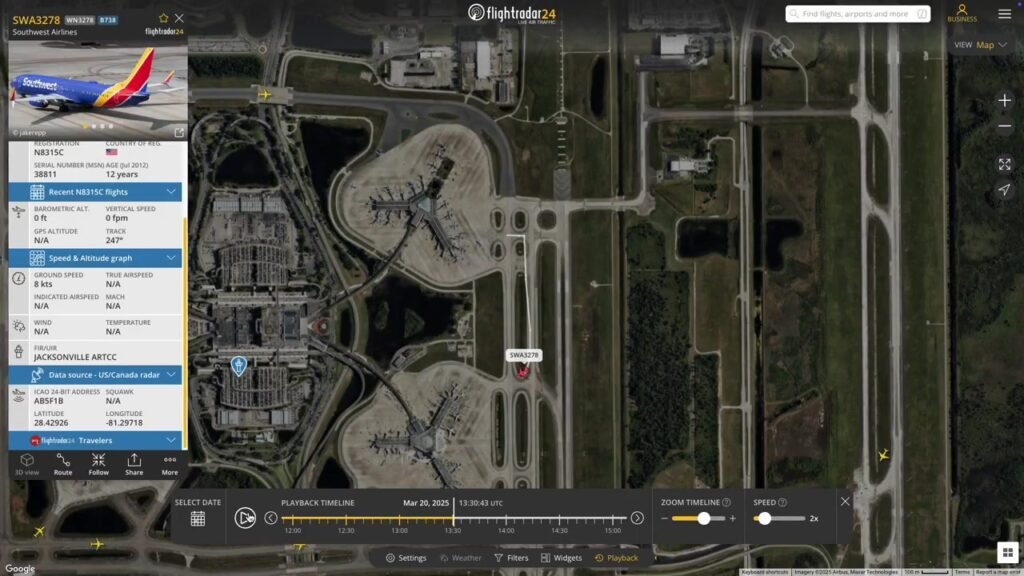
Southwest 737’s Taxiway Takeoff Mistake at Orlando Airport: What Really Happened?
If you’re a local Space Coast resident or an aviation enthusiast, you might have heard the buzz this morning: a Southwest 737-800 accidentally began its takeoff roll on a taxiway. That’s right—a genuine mix-up that left many passengers and onlookers both relieved and intrigued!
An Unexpected Move: The Taxiway Takeoff
According to the Federal Aviation Administration (FAA), the Southwest 737-800 “began its takeoff roll on a taxiway” early this morning at Orlando Airport. Ground speed ADS-B data confirms that the aircraft reached a top speed of nearly 70 knots on Taxiway H before the crew realized their error.
Now, you might be wondering: how does such a mix-up occur? Well, in the buzz of airport operations and under the pressure of a busy schedule, even seasoned flight crews can sometimes mistake a taxiway for a runway. In this case, the misinterpretation was caught early, ensuring that safety wasn’t compromised.
Breaking Down the Incident: A Quick FAQ
- What exactly happened?
The flight crew initiated a takeoff roll on Taxiway H, mistakenly assuming it was the runway. The error was quickly identified, and normal operations resumed. - Why did it happen?
Factors can include high operational pressure, miscommunication, or even momentary confusion due to similar markings between taxiways and runways. - Is this a common occurrence?
While extremely rare, similar incidents have been reported in aviation history—reminding us how vital clarity and caution are in airport navigation.
Comparing Taxiways and Runways: A Handy Data Table
| Feature | Taxiway | Runway |
|---|---|---|
| Purpose | Ground movement and aircraft positioning | Takeoff and landing operations |
| Markings | Yellow stripes, taxiway signs | Runway numbers, threshold markings, and safety areas |
| Surface | Smooth pavement designed for slow speeds | Robust surfaces built to handle high speeds and weights |
Insert image of an aircraft on Taxiway H at Orlando Airport here.
Local Impact and Broader Implications
This mix-up at Orlando Airport serves as a reminder to everyone—whether you’re a frequent flyer or a local Space Coast resident—that even in the modern era of automated precision, human oversight remains a critical factor in air travel. Southwest Airlines has already stated that its flight crew mistook the taxiway for a runway, and while no harm was done, the incident has sparked lively debates online among travelers and aviation experts alike.
Key Takeaways and What’s Next
- Safety First: Quick detection and correction is key in preventing potential dangers.
- Constant Vigilance: Even experienced crews must maintain their attention at all times.
- Aviation Insights: Incidents like these offer valuable learning experiences for the entire aviation community.
At the end of the day, this incident highlights the importance of diligence and robust safety protocols. It’s a reminder that in aviation—as in life—staying alert and informed can make all the difference.
Your Thoughts?
So, what do you think? Did the crew simply have an off day, or does this incident point to larger systemic issues in airport operations? Let’s get the conversation going in the comments below. And if you found this post insightful, share it on social media to keep the discussion alive among your friends and fellow Space Coast enthusiasts!
For more detailed news on aviation and local happenings, visit the FAA website.