
“`html
When One of Florida’s Toughest Sheriffs Says We Need Immigration Reform, You Should Probably Listen
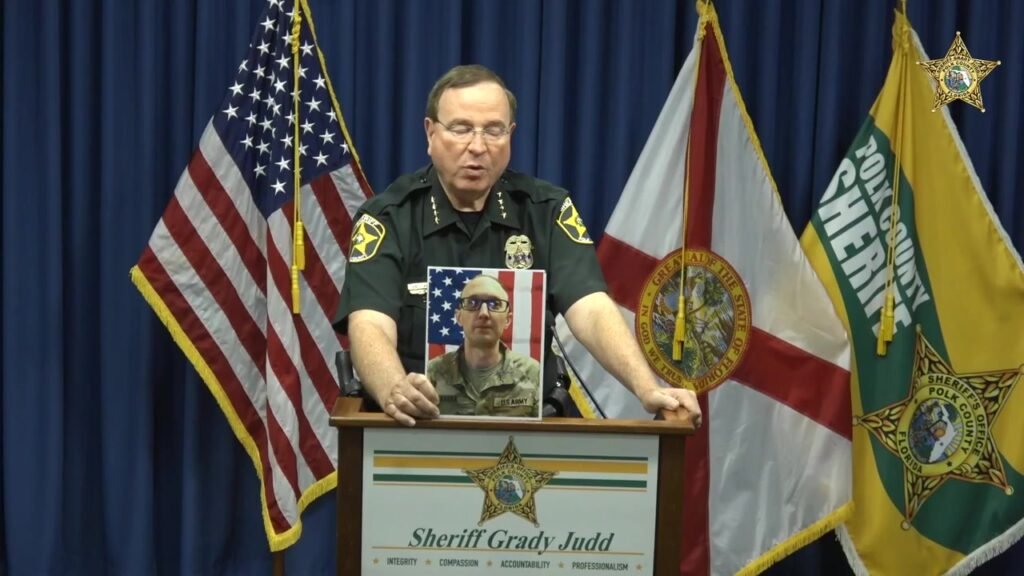
Look, I’ll be honest with you. When I first heard that Sheriff Grady Judd—yes, that Grady Judd, the guy who holds press conferences that go viral faster than cat videos—was calling for a path to citizenship, I nearly spit out my Cuban coffee.
If you’ve lived in Florida for more than a hot minute, you know Sheriff Judd doesn’t exactly mince words. The Polk County lawman has built a reputation as one of the state’s most no-nonsense law enforcement officers. He’s the sheriff who once said criminals should expect to be shot if they break into homes, and who holds press conferences with the theatrical flair of a seasoned prosecutor. So when he’s the one saying we need immigration reform? That’s not just news—that’s a seismic shift in the conversation.
What Did Sheriff Judd Actually Say?
Here’s the thing that caught everyone off guard. During recent comments about immigration policy, Sheriff Judd made a statement that probably had both sides of the political aisle doing a double-take:
“The way our system is designed, we can’t get millions of people out of the country anyways.”
Now, this isn’t some liberal activist speaking. This isn’t a politician pandering for votes. This is a career law enforcement officer who’s spent decades dealing with the real-world consequences of our broken immigration system. And he’s telling us what anyone paying attention already knows—mass deportation isn’t just impractical, it’s impossible.
Why This Matters to Melbourne and Brevard County
You might be thinking, “Okay, but Polk County isn’t exactly next door.” True. But immigration policy affects every corner of Florida, including right here in Melbourne. Our restaurants, construction sites, landscaping companies, and even tech sector rely on immigrant labor—both documented and undocumented.
Drive down Babcock Street or through Palm Bay, and you’ll see the diversity that makes Brevard County what it is today. We’re not some isolated bubble immune to national immigration debates. What happens in Washington affects the family running your favorite taco spot and the crew building new developments in Viera.
The Reality Check Nobody Wants to Admit
Sheriff Judd’s comments hit different because they’re rooted in reality, not ideology. Let me break down what he’s really saying:
- The numbers don’t lie: There are an estimated 11-12 million undocumented immigrants in the United States. That’s roughly the entire population of Ohio.
- The logistics are impossible: Even if you wanted to deport everyone, the infrastructure, cost, and manpower required would be staggering.
- The economic impact would be devastating: Removing millions of workers overnight would cripple industries across Florida and beyond.
I’ve talked to business owners here in Melbourne who tell me the same thing off the record. They’re struggling to find workers as it is. Take away a significant portion of the labor force? Good luck getting your roof repaired or finding someone to pick crops in nearby Indian River County.
What Does a “Path to Citizenship” Actually Mean?
Before everyone starts freaming out, let’s clarify what we’re talking about. A path to citizenship doesn’t mean automatic amnesty or cutting in line. Most proposed pathways include:
- Background checks and security vetting
- Paying fines for previous violations
- Learning English
- Waiting periods (often years or decades)
- Paying back taxes
- Proving continuous employment or community ties
It’s not a free pass. It’s more like a probationary period where people can earn their status rather than living in the shadows.
The Law Enforcement Perspective Nobody Talks About
Here’s something that doesn’t get enough attention: having millions of people living outside the legal system actually makes law enforcement harder.
Think about it. If you’re undocumented and you witness a crime, are you going to call the police? Probably not, if you’re afraid you’ll be deported. If you’re a victim of domestic violence, theft, or fraud, do you report it? Many don’t.
Sheriff Judd understands this. When people live in fear of deportation, they become invisible—and that invisibility creates opportunities for criminals to exploit them. Human trafficking, wage theft, and other crimes flourish in communities where victims are too scared to come forward.
What Other Florida Law Enforcement Officials Are Saying
Judd isn’t alone in this assessment, though he might be the most prominent voice. Police chiefs and sheriffs across Florida have privately acknowledged that immigration enforcement often conflicts with community policing efforts.
When local police become de facto immigration agents, trust erodes. Communities clam up. Crime goes unreported. It’s a lose-lose situation for everyone except the actual criminals.
The Economics of It All
Let’s get real about the money for a second, because that’s what usually motivates policy changes more than anything else.
| Economic Factor | Impact of Mass Deportation | Impact of Path to Citizenship |
|---|---|---|
| Labor Force | Immediate shortage, wage spikes, business closures | Stable workforce, predictable wages |
| Tax Revenue | Loss of sales tax, payroll contributions | Increased income tax collection, formalized employment |
| Housing Market | Potential crash from sudden vacancies | Continued stability and growth |
| Consumer Spending | Dramatic decrease affecting local businesses | Increased spending power and economic participation |
Florida’s economy—especially here on the Space Coast where we’re seeing explosive growth—depends on a steady supply of workers. You can’t build new housing developments, staff hotels, or run restaurants without people willing to do the work.
What This Means for Our Community
I know some of you reading this are skeptical. Maybe you’re thinking about rule of law, or fairness to people who immigrated legally, or genuine security concerns. Those are valid points, and they deserve serious consideration.
But Sheriff Judd isn’t some soft-on-crime liberal. He’s a pragmatist who’s seen what works and what doesn’t. And what he’s telling us is that our current system isn’t working for anyone—not for law enforcement, not for businesses, not for communities, and certainly not for the millions of people living in legal limbo.
The Questions We Should Be Asking
Instead of retreating to our respective corners and shouting past each other, maybe we should be asking:
- How do we secure our borders and deal humanely with people already here?
- What’s the real cost—financial and social—of the status quo?
- Can we create a system that respects both law and human dignity?
- What does meaningful immigration reform actually look like in 2025?
These aren’t easy questions. But they’re the right ones.
Why Grady Judd’s Voice Matters So Much Right Now
Here’s the beautiful irony of this whole situation: it took someone with Sheriff Judd’s tough-on-crime credentials to say what a lot of people have been thinking but were