

In the vast expanse of the cosmos, where galaxies whirl and stars are born and extinguished, the universe often reveals intriguing mysteries that captivate scientists and stargazers alike. Among the most enigmatic of these celestial phenomena is Boyajian’s Star, a stellar body that first garnered attention for its unusual brightness fluctuations. Back in 2017, the Spitzer Space Telescope, with its remarkable ability to observe the universe in infrared light, turned its gaze toward this captivating star, seeking to unravel the secrets hidden within its fluctuating luminosity. In this edition of “Photo of the Day,” we delve into the significant findings from that pivotal moment, exploring what the images captured by Spitzer tell us about the intricacies of Boyajian’s Star and the broader implications for our understanding of the universe. Join us as we journey through the wonders of astronomy, where even the faintest flicker of light can spark curiosity and reveal the cosmos’ deepest mysteries.
The Mystique of Boyajian’s Star: Unraveling the Light Curves
The enigmatic light patterns of Boyajian’s Star, also known as KIC 8462852, have engrossed astronomers and enthusiasts alike. Discovered through the Kepler Space Telescope, this star exhibited significant and irregular dimming, leading to a flurry of theories regarding its nature. Some suggested the presence of a large orbiting structure, while others considered natural phenomena like comet swarms. The light curves captured during observations revealed an intricate dance of brightness that defies traditional explanations, causing excitement and intrigue in the scientific community.
By utilizing the sophisticated instruments of the Spitzer Space Telescope, researchers were able to gather more detailed observations, enabling them to sift through potential hypotheses about this stellar mystery. The data collected provided vital insights into its unique fluctuations. Key elements of the light curves include:
- Multiple Dimming Events: Variations occurring over days and months.
- Irregular Patterns: Unpredictable fluctuations over time.
- Potential Exoplanetary Influence: Theoretical calculations suggesting gravitational interactions.
In an effort to further understand the behavior of Boyajian’s Star, researchers created the table below summarizing the observational data collected by the Spitzer Space Telescope:
| Observation Date | Brightness (mag) | Dimming Event |
|---|---|---|
| 2015-08-22 | 15.0 | Initial Detection |
| 2016-04-05 | 14.5 | First Dimming |
| 2017-03-10 | 14.8 | Notable Fluctuation |
As the studies progress, the quest to unravel the mystique surrounding Boyajian’s Star continues. Each discovery adds a new layer to our understanding of this extraordinary celestial object, paving the way for future explorations in the realms of astronomy and astrophysics.
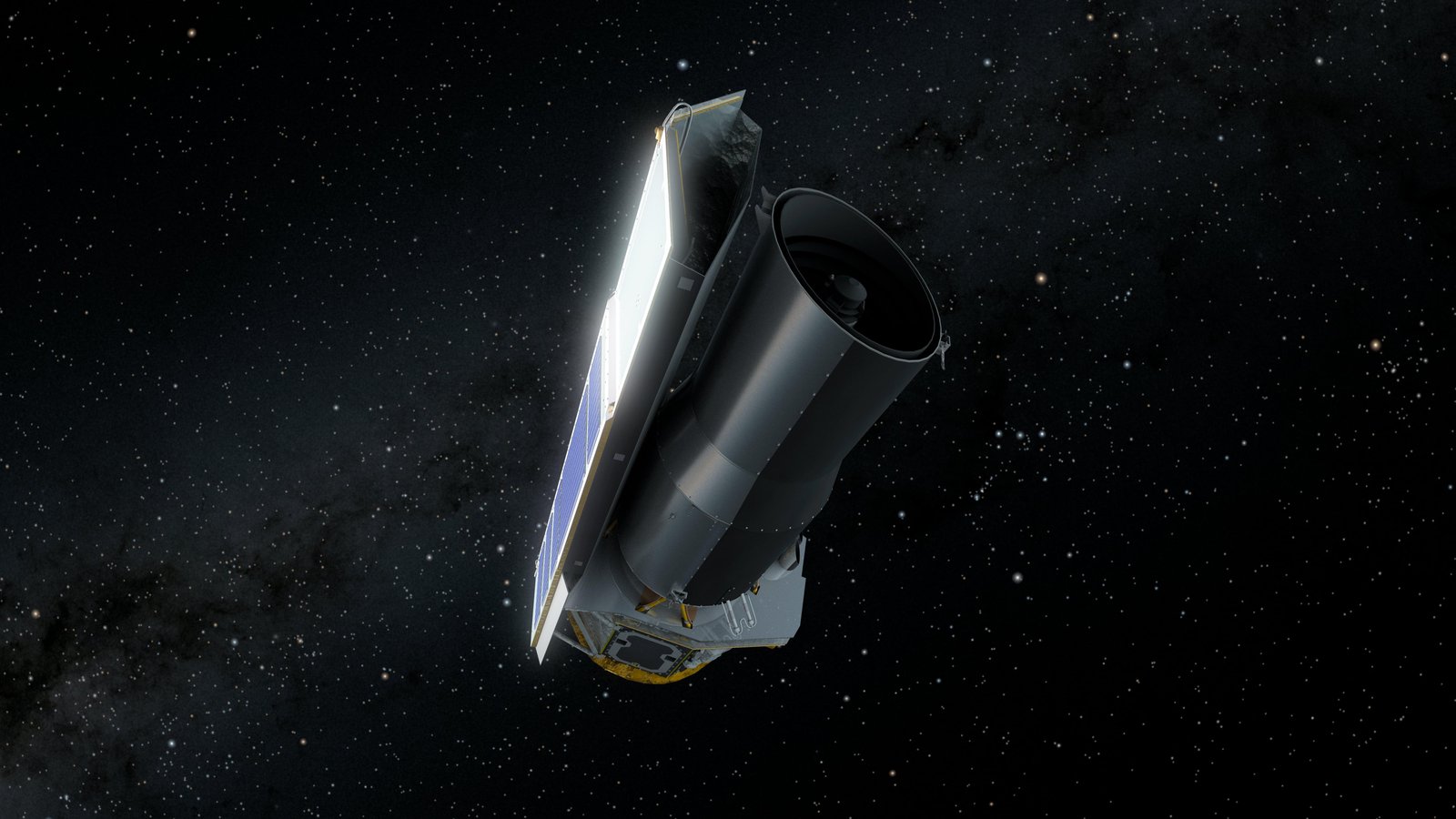
Spitzer’s Role in Observational Astronomy: Insights from the 2017 Discovery
The Spitzer Space Telescope has long established itself as a powerful tool in the realm of observational astronomy, providing critical insights into celestial phenomena that would otherwise remain elusive. In 2017, Spitzer’s groundbreaking observations of Boyajian’s Star—a mysterious star known for its significant and irregular dimming—offered astronomers a rare glimpse into the complexities of stellar behavior. These observations reinforced Spitzer’s reputation as an indispensable asset for deep-space research, enabling scientists to explore the question of whether the dimming was caused by a large structure orbiting the star, or by natural variability of the star itself. The ability to capture long-wavelength infrared light allowed Spitzer to distinguish between potential explanations with unparalleled clarity.
Through its sophisticated instruments, Spitzer provided crucial data that allowed researchers to construct a more comprehensive understanding of Boyajian’s Star. Some key insights derived from Spitzer’s observations include:
- Infrared Light Curves: Detailed light curves captured varying levels of brightness, revealing patterns that prompted further hypotheses.
- Thermal Emission Analysis: Spitzer’s ability to analyze thermal emissions helped rule out certain theories, narrowing down the cause of dimming.
- Environmental Context: Observations indicated the star’s interaction with its environment, highlighting its unique place in our galaxy.
These findings not only elucidated the behavior of Boyajian’s Star but also exemplified the instrumental role Spitzer continues to play in expanding our comprehension of stellar and cosmic dynamics. The telescope’s legacy in uncovering such cosmic mysteries is a testament to the power of modern observational techniques in unearthing the secrets of the universe.

The Implications of Boyajian’s Star on Stellar Evolution Theories
The observations of Boyajian’s Star have ignited significant discussions in the scientific community regarding our understanding of stellar evolution. The unusual dimming patterns observed over time have led researchers to rethink existing models of star behavior, particularly concerning the lifecycle of stars of similar types. Boyajian’s Star, also known as KIC 8462852, exhibited irregular and dramatic declines in brightness, puzzling astronomers since its discovery. This unpredictability raises questions about the processes that govern stellar life cycles, particularly how certain stars may develop anomalies that deviate from established theories.
Several hypotheses have emerged to explain these fluctuations, including the possibility of a ‘meginastructure’ built by advanced civilizations or the presence of multiple massive objects orbiting the star. These discussions not only question the conventional understanding of how stars evolve but also encourage a broader consideration of potential extraterrestrial phenomena. As research continues, the implications of Boyajian’s Star may lead to a paradigm shift in stellar classification, suggesting that classification systems might need to incorporate unexpected behaviors and characteristics. Here, the potential for new knowledge could refine our quest to understand the cosmos and our place within it.
| Research Topic | Implications |
|---|---|
| Stellar Anomalies | Reassessing classification systems |
| Extraterrestrial Hypotheses | Expansion of astrobiological studies |
| Planetary Formation | New insights into formation processes |

Recommendations for Amateur Astronomers: Engaging with Ongoing Research
Amateur astronomers looking to deepen their engagement with ongoing research can take inspiration from the fascinating case of Boyajian’s Star. This mysterious star has captivated the astronomical community since its discovery, largely due to its unusual dimming patterns. To explore similar phenomena, consider participating in citizen science projects where you can contribute to the data collection and analysis of celestial events. Joining platforms such as blank”>Zooniverse or Q&A
Q: What is the significance of Boyajian’s Star in astronomical studies? Q: Why was the Spitzer Space Telescope involved in studying Boyajian’s Star? Q: What was revealed in the 2017 observations of Boyajian’s Star? Q: How has public interest in Boyajian’s Star influenced scientific research? Q: What can we learn from the continued study of Boyajian’s Star? Q: Is there a takeaway from the 2017 Spitzer observations that has broader implications in astrophysics? The intrigue surrounding Boyajian’s Star continues to inspire research and curiosity across the scientific community, proving that even in silence, the cosmos can whisper secrets waiting to be uncovered. As we look back on the remarkable discovery made by the Spitzer Space Telescope in 2017, the enigma of Boyajian’s Star continues to capture the imagination of astronomers and stargazers alike. This celestial body, shrouded in mystery and intrigue, serves as a testament to the boundaries of our understanding and the relentless pursuit of knowledge beyond our earthly realm. Through the lens of advanced technology and the unyielding spirit of exploration, we are reminded of the countless wonders that the universe holds, waiting to be unveiled. As we close this chapter, let us carry forward the curiosity that drives us to seek answers and explore the cosmos, for each day presents the potential for new discoveries that challenge our perceptions and expand the horizons of science. Until our next shared moment of cosmic revelation, may the stars continue to inspire wonder and inquiry in the hearts of those who dare to look up. Q&A: PHOTO OF THE DAY - NASA Spitzer Telescope Spots Boyajian’s Star Back in 2017
A: Boyajian’s Star, also known as KIC 8462852, gained considerable attention due to its unusual light fluctuations. Discovered by the Kepler Space Telescope, the star exhibited irregular and dramatic dips in brightness, leading researchers to speculate about possible explanations, ranging from the presence of a swarm of comets to more exotic concepts like megastructures built by advanced civilizations.
A: The Spitzer Space Telescope has the ability to observe infrared wavelengths, which adds depth to our understanding of celestial bodies. Its observations of Boyajian’s Star were critical in determining the cause of the unprecedented brightness declinations and in ruling out several theories, providing a clearer picture of the star’s behavior and surrounding environment.
A: In 2017, Spitzer’s observations revealed that the dips in brightness were likely not caused by a single large object, but rather by a combination of smaller objects, possibly dust and debris. This finding helped clarify the nature of the star’s unusual light patterns, bringing astronomers closer to solving the mystery.
A: The star’s enigmatic light patterns captured the imagination of both scientists and the public alike, sparking numerous studies, theories, and even popular speculation regarding extraterrestrial intelligence. This interest has led to a surge in funding and collaborative efforts aimed at deepening our understanding of stellar physics and the potential for life beyond Earth.
A: Continued observations of Boyajian’s Star and similar celestial phenomena can enhance our understanding of stellar evolution, the lifecycle of stars, and the composition of interstellar materials. Additionally, studying such stars may refine our search criteria for extraterrestrial life and help astronomers develop better models for predicting stellar behavior.
A: Yes, the findings from the Spitzer observations of Boyajian’s Star underscore the importance of multi-wavelength observations in addressing complex astronomical questions. By integrating data from various telescopes and techniques, astronomers can construct more comprehensive models of celestial mechanics, paving the way for future discoveries in our universe. Closing Thoughts
Wrapping Up