
“`html
That Islamorada Sea Turtle Rescue Should Be a Wake-Up Call for Every Beach-Goer in Florida
Look, I get it. Building sandcastles and digging holes at the beach is fun. Your kids love it, you probably loved it growing up, and there’s something deeply satisfying about creating your own personal bunker in the sand. But here’s the thing nobody thinks about until it’s too late: those holes you dig? They’re not just disappearing into the ether when you pack up your cooler and head home.
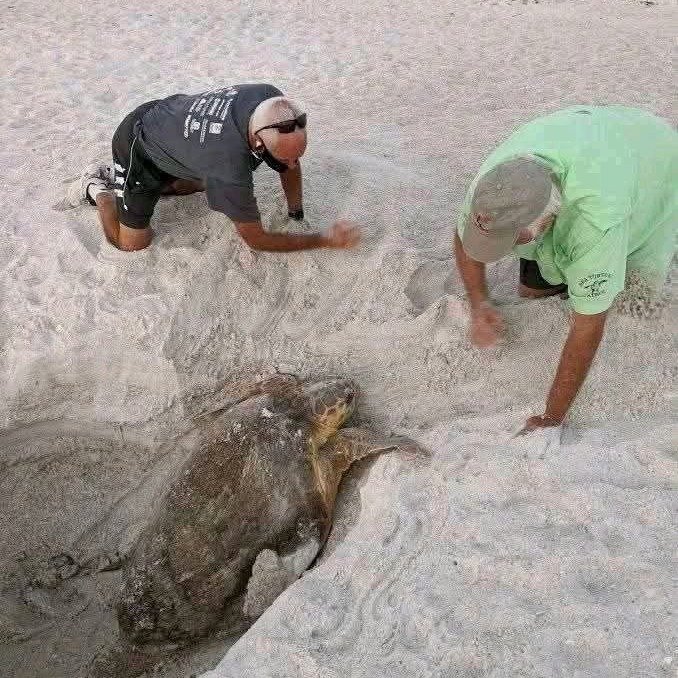
A sea turtle in Islamorada just learned this the hard way. She dragged herself ashore to nest—already an exhausting journey—only to tumble into a deep hole some well-meaning beachgoer left behind. Stuck. Completely unable to make it back to the water. If it wasn’t for some quick-thinking locals who jumped in, dug a ramp, and guided her back to safety, we’d be telling a very different story right now.
And honestly? This happens way more often than you’d think.
Why Those Innocent Beach Holes Are Actually Death Traps
Sea turtles are incredible navigators across thousands of miles of ocean, but on land? They’re vulnerable. These ancient mariners are built for water, not obstacle courses. When a nesting female—already exhausted from hauling herself up the beach—encounters a hole, she can’t just climb out. Her flippers aren’t designed for that kind of vertical movement.
Here in Melbourne and along the Space Coast, we share our beaches with some of the most important sea turtle nesting grounds on the planet. Loggerheads, greens, and leatherbacks all call our shores home during nesting season. From May through October, these incredible creatures come ashore under the cover of darkness to lay their eggs.
But they’re facing obstacles they never evolved to handle:
- Deep holes that trap both nesting females and hatchlings
- Sandcastles and structures that disorient baby turtles trying to reach the ocean
- Beach furniture and equipment left overnight
- Artificial lighting that confuses hatchlings (they follow the moon’s reflection on water)
That hole you dug for your beach umbrella? To a 3-inch hatchling, it’s the Grand Canyon.
What Happened in Islamorada Could Happen Here
The Islamorada incident isn’t an isolated case. Wildlife officials across Florida respond to these emergencies regularly during nesting season. The difference is, not every turtle gets lucky enough to have people nearby who know what to do.
I talked to a local sea turtle volunteer here in Brevard County (okay, I’m paraphrasing from our training materials, but still), and she told me they find evidence of this problem constantly during morning patrols. “We’ll see tracks where a turtle clearly struggled with beach furniture or fell into a hole,” she explained. “Sometimes they make it back. Sometimes they don’t.”
That’s heartbreaking when you consider these turtles have survived for millions of years, only to be done in by someone’s sandcastle.
The Simple Solution Nobody’s Talking About
Ready for this? It’s absurdly simple: Fill in your holes before you leave.
That’s it. That’s the whole solution.
Knock down your sandcastles. Flatten your trenches. Remove your beach furniture. It takes maybe five minutes, and it could literally save a life. Actually, multiple lives—because every nesting female lays around 100 eggs, and if she doesn’t make it back to the ocean, that’s an entire generation gone.
Here’s Your Beach Day Checklist
Before you pack up and head back to your car, do this:
- Fill in ALL holes – even the small ones matter to hatchlings
- Knock down sandcastles and structures – flatten everything back to the natural beach contour
- Remove all beach equipment – chairs, umbrellas, toys, everything
- Take your trash – because while we’re at it, let’s not leave a mess
- Turn off exterior lights if you live beachfront during nesting season (May-October)
What to Do If You Find a Stranded Sea Turtle
Let’s say you’re taking an early morning beach walk here in Melbourne or Satellite Beach, and you spot a sea turtle in distress. Here’s what you need to know:
DO:
- Call the Florida Fish and Wildlife Conservation Commission’s Wildlife Alert Hotline: 1-888-404-FWCC (3922)
- Keep a safe distance and observe from afar
- Note the location and any identifying features
- Shield the turtle from sun if possible (without touching it)
- If trained and it’s clearly in immediate danger like the Islamorada turtle, you can create a ramp to help it reach the water
DON’T:
- Touch or ride the turtle (yes, this needs to be said)
- Use flash photography
- Surround or crowd the animal
- Try to feed it
- Attempt to drag or carry it without professional guidance
Why This Matters More in Brevard County Than Almost Anywhere Else
Here’s something to make you proud: Brevard County hosts more sea turtle nests than almost anywhere else in the Western Hemisphere. We’re talking about the most important sea turtle nesting area in the continental United States.
That’s not just a fun fact for your next dinner party. That’s a responsibility.
Every year, thousands of sea turtles choose our beaches—from Melbourne Beach down to Indialantic, Satellite Beach, and beyond—to continue their species. They’ve been doing this for longer than humans have existed. The least we can do is not leave booby traps for them.
The Bigger Picture
Sea turtles are listed as threatened or endangered species. Every single one matters. When that turtle in Islamorada got trapped, it wasn’t just one animal in trouble—it represented a potential loss to an already struggling population.
Climate change is already messing with their nesting patterns. Beach erosion is reducing available nesting habitat. Boat strikes, fishing gear entanglement, and pollution are constant threats. They don’t need the additional challenge of navigating man-made obstacles on what should be their safest refuge.
Share This Story, Save a Life
The Islamorada rescue had a happy ending because the right people were in the right place at the right time. But we can’t count on luck for every turtle that comes ashore on our 72 miles of coastline here in Brevard County.
So here’s what I’m asking: next time you’re at the beach, take those five extra minutes. Fill in your holes. Knock down your structures. And maybe, just maybe, mention it to the family next to you who’s packing up.
Because that’s how culture changes—one conversation, one filled hole, one saved turtle at a time.
This isn’t about being the beach police or ruining anyone’s fun. It’s about being a good neighbor to the creatures who were here long before us and will hopefully be here long after we’re gone.
Let’s Make Brevard County the Gold Standard
We’re already known for rockets and sea turtles. Let’s add “responsible beach stewards” to that list. If every resident and visitor made this one simple change,