
Wildfire Risk in Melbourne: How Local Residents Are Preparing for the Rising Threat
The scent of smoke hangs in the air more frequently these days around Brevard County. As a Melbourne resident myself, I’ve noticed the change. Wildfires aren’t just a distant California problem anymore – they’re becoming an increasing concern right here in our Florida community.
Last week, I watched as my neighbor trimmed back the palmetto bushes that had grown too close to his house. “Better safe than sorry,” he told me with a knowing nod. That simple interaction got me thinking about how our community is responding to the rising wildfire threat – and what we all need to know to stay prepared.
Why Wildfire Risk Is Increasing in Brevard County
Climate change isn’t just a political talking point – it’s creating real effects in our backyard. Longer dry spells, higher temperatures, and changing weather patterns have created perfect conditions for wildfires to spark and spread rapidly across our typically lush landscape.
The Florida Forest Service reported a 23% increase in wildfire activity in Brevard County over the past three years. These aren’t just statistics – they represent real threats to our homes, businesses, and the natural environments we cherish.
Areas of Highest Concern in Melbourne
Not all neighborhoods face equal risk. Communities bordering conservation areas, those with abundant vegetation, and areas with limited evacuation routes face heightened vulnerability. If you live near places like the Wickham Park conservation area or the wooded regions around Lake Washington, your wildfire risk profile may be elevated.
Here’s a breakdown of high-risk areas in our community:
| Area | Risk Level | Key Factors |
|---|---|---|
| West Melbourne/Rural Boundaries | High | Dense vegetation, limited water access |
| Suntree/Viera Preserves | Moderate-High | Protected woodlands, residential proximity |
| Palm Bay Woodlands | High | Expansive undeveloped areas, scattered housing |
| Downtown Melbourne | Low | Urban environment, fewer fuel sources |
How Melbourne Residents Are Taking Action
The good news? We’re not sitting idle. Our community has been stepping up in impressive ways to prepare for this growing threat.
Local fire departments have expanded their wildfire response capabilities, with the Melbourne Fire Department recently acquiring specialized equipment designed specifically for brush and wildland fires. They’ve also launched community education initiatives aimed at helping residents understand their risk and take preventive measures.
But the real heroes? They’re everyday people like you and me who are making smart changes to protect their properties and families.
Creating Defensible Space: Your First Line of Defense
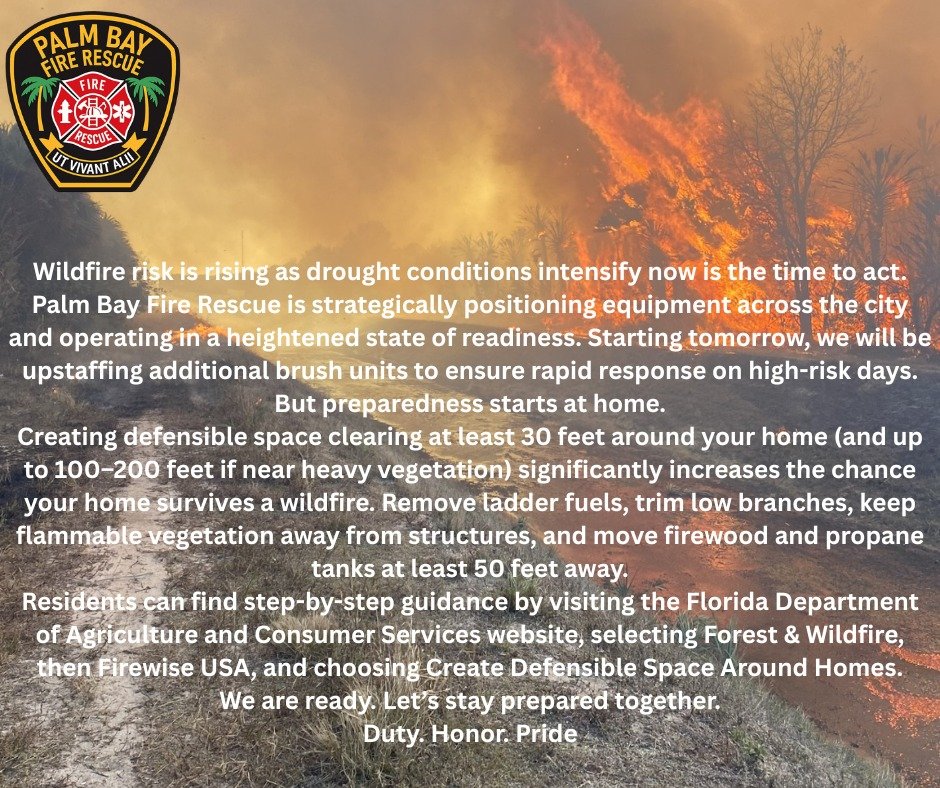
One of the most effective strategies I’ve seen neighbors implement is creating what firefighters call “defensible space” – a buffer zone between your home and the grass, trees, and shrubs that could fuel a fire.
This isn’t about clear-cutting your beautiful Florida landscaping. It’s about smart choices like:
- Removing dead vegetation within 30 feet of your home
- Keeping tree branches trimmed at least 10 feet from your roof
- Choosing fire-resistant native plants for landscaping
- Clearing leaves and debris from gutters and roof
- Storing firewood and propane tanks away from structures
Small steps like these can make a huge difference when sparks fly. And trust me, after seeing how quickly last year’s brush fire near Wickham Road spread, these precautions are well worth the weekend yard work.
Community Resources You Should Know About
You don’t have to face this challenge alone. Brevard County has developed robust resources to help residents prepare:
The Brevard Emergency Management Office offers free property assessments to identify your specific wildfire risks. I scheduled one last month, and their recommendations were eye-opening – they spotted hazards I’d completely overlooked.
Ready, Set, Go! workshops are regularly held at the Melbourne Public Library and community centers, providing practical guidance on creating family evacuation plans. Having attended one recently, I can tell you they’re worth your time, especially if you have children or pets.
The Florida Forest Service provides real-time wildfire monitoring through their online alert system. I’ve bookmarked it on my phone – it’s particularly useful during our dry season from November through May.
What’s Your Wildfire Preparedness Plan?
Being prepared isn’t just about protecting physical property – it’s about peace of mind. Do you know what irreplaceable items you’d grab if you had 15 minutes to evacuate? Have you discussed meeting points with your family? Is your insurance coverage adequate for wildfire damage?
These aren’t comfortable questions, but they’re necessary ones. As Melbourne continues to grow and develop, pushing further into previously undeveloped areas, our collective wildfire risk increases. The time to prepare isn’t when smoke appears on the horizon – it’s now, when clear heads can make thoughtful plans.
Take Action Today
I’m not writing this to cause alarm, but to encourage action. Our community is positioned and prepared to face this challenge – and you can be too.
Start by assessing your property’s vulnerabilities. Then connect with local resources for guidance. Create your family emergency plan, and share what you learn with neighbors. Together, we can build a more resilient Melbourne – one prepared property at a time.
Has your neighborhood organized any wildfire preparedness initiatives? Share your experiences in the comments below – your insights might help fellow residents take that crucial first step toward better protection.
Wildfire risk is rising. We are positioned. We are prepared. Source link